

How Much Should You Budget for a Landscaping Project in Colorado?
November 4, 2026
How Much Should You Budget for a Landscaping Project in Colorado?
November 4, 2026
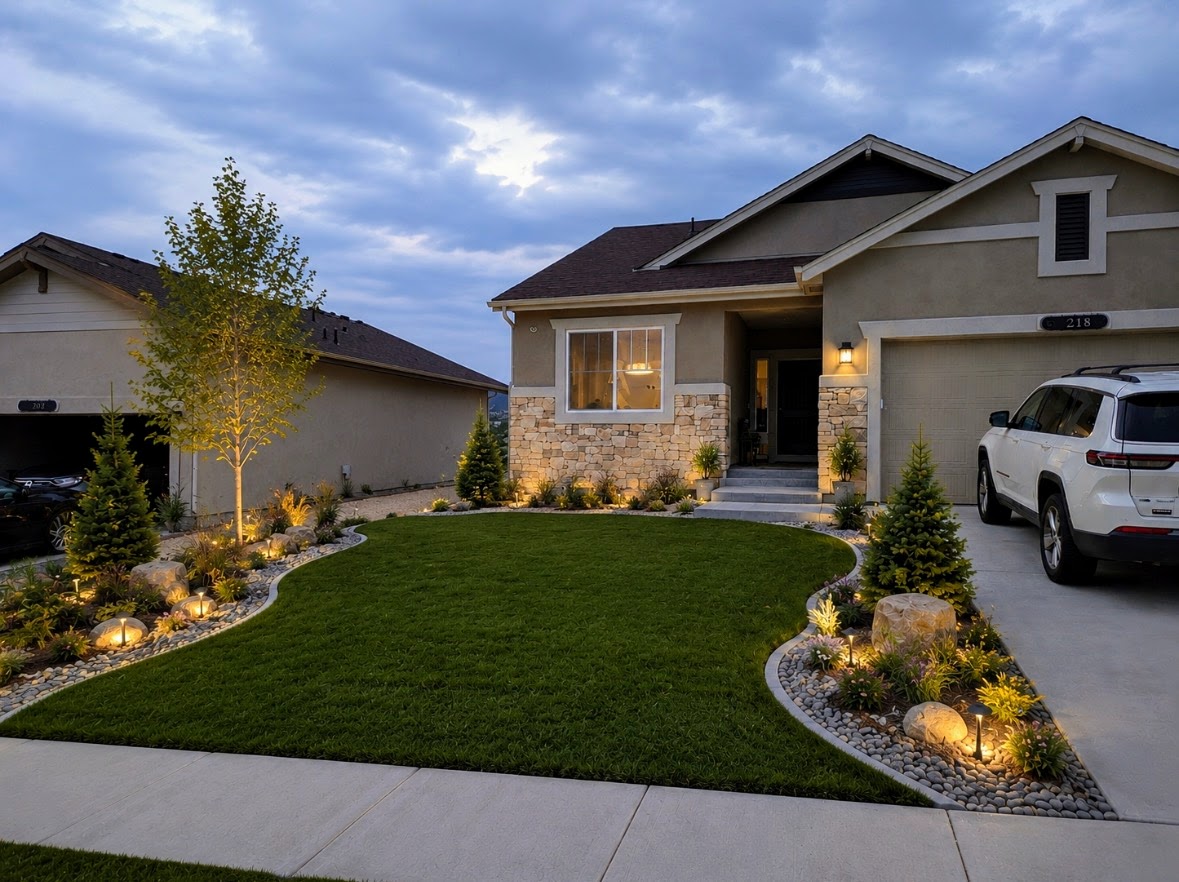
How Much Should You Budget for a Landscaping Project in Colorado?
Planning a custom landscaping project is exciting, but one of the first questions most homeowners ask is: “How much should I expect to spend?”
There is no single price that applies to every yard. A simple front-yard refresh and a complete luxury outdoor living space involve very different materials, labor, equipment, and construction requirements. Your property’s size, access, slope, drainage, soil, design complexity, and selected features will all influence the final investment.
As a general planning guide, customized Colorado landscaping projects may begin around $20,000, while comprehensive luxury transformations can exceed $100,000 or even $200,000. These figures are not estimates or guaranteed prices. A detailed design and site evaluation are necessary to determine the actual cost of your project.
At Alpine Landscaping LLC, we design and build customized landscapes throughout Colorado Springs and surrounding communities. All landscape design and construction work is completed by Alpine Landscaping, providing consistent communication, craftsmanship, and accountability from the first meeting through final installation.
Typical Colorado Landscaping Budget Levels
The following ranges can help you establish an initial landscaping budget. They are intended as planning tiers rather than fixed quotes.
| Planning budget | What the project may include |
|---|---|
| $20,000–$40,000 | Focused front-yard renovation, smaller patio, planting beds, decorative rock, irrigation modifications, sod or limited hardscaping |
| $40,000–$80,000 | Larger patio, fire-pit area, retaining walls, extensive planting, irrigation, lighting or a combination of several features |
| $80,000–$150,000 | Complete backyard transformation with premium hardscaping, outdoor rooms, kitchen, fire feature, walls, drainage, irrigation and planting |
| $150,000 and above | Large luxury or estate landscape with extensive grading, structural walls, multiple patios, outdoor kitchen, water features, lighting and customized amenities |
A smaller property is not automatically inexpensive. Restricted access, demolition, hand excavation, extensive drainage work, utility conflicts, or premium materials can substantially affect the cost per square foot.
Likewise, a large property may be developed in phases to distribute the investment over several seasons.
What Determines the Cost of a Landscaping Project?
The visible materials are only one part of a professional landscaping budget. Much of the investment may be in preparation and construction that cannot be seen once the project is complete.
Major cost factors include:
- Landscape design
- Demolition and removal
- Site access
- Excavation
- Grading
- Drainage
- Soil conditions
- Base preparation
- Material selection
- Retaining walls
- Irrigation
- Plants and trees
- Lighting
- Utilities
- Equipment requirements
- Permits or engineering
- HOA requirements
- Project complexity
- Seasonal and weather conditions
Understanding these factors can help homeowners compare estimates more accurately.
Start With a Realistic Landscaping Budget
A productive design process begins with an honest budget conversation. Your landscaper needs to understand the approximate investment you are comfortable making so the design can be created around realistic materials and features.
Without a working budget, a design may include improvements that are attractive but financially impractical. That can result in unnecessary redesign work, delays, and disappointment.
Before meeting with a landscape designer, consider:
- Your ideal maximum investment
- The features you consider essential
- Features you would like if the budget permits
- Work that could be completed in a future phase
- How long you expect to remain in the home
- Your preferred maintenance level
- Whether financing will be used
- The importance of immediate versus long-term value
A professional design should balance appearance, function, construction requirements, and cost from the beginning.
Explore Alpine Landscaping’s custom luxury landscape design and hardscaping to see how these elements can work together.
Low-End Options: Focus the Investment Where It Matters Most
A lower landscaping budget does not mean the result has to feel inexpensive. The key is concentrating the available funds on a smaller number of high-impact improvements.
A focused project might include:
- One well-designed paver or flagstone area
- A front entrance renovation
- A small fire-pit area
- Decorative rock and mulch
- Selected boulder accents
- A limited number of larger plants
- Irrigation modifications
- Sod or artificial turf in a targeted area
- Basic landscape lighting
- Drainage corrections
How to Create a Luxury Look on a Lower Budget
To make a focused project feel high-end:
- Use fewer materials and coordinate them carefully.
- Invest in one strong focal point.
- Repeat plant varieties rather than installing one of everything.
- Concentrate larger plants near entrances and gathering areas.
- Preserve existing features that remain functional.
- Use decorative borders only where they have the most impact.
- Keep the layout simple and intentional.
- Plan future phases before installing the first phase.
A simple design built correctly will usually provide better long-term value than an overly ambitious design constructed with inadequate preparation.
Mid-Range Options: Combine Hardscaping and Landscaping
A mid-range customized project often combines a significant hardscape feature with planting, irrigation, and other supporting improvements.
Possible features include:
- A larger paver or flagstone patio
- A built-in fire pit
- A seating wall
- One or more retaining walls
- A pergola area
- Landscape lighting
- New irrigation zones
- Trees, shrubs, grasses, and perennials
- Decorative rock or mulch
- Drainage improvements
- Sod or artificial turf
This budget level can create a complete outdoor room rather than a collection of separate upgrades.
For example, a patio might be paired with a fire feature, seat wall, planting beds, and lighting. Designing these components together produces a more polished result and may prevent future demolition when additional features are installed.
High-End Options: Complete Luxury Landscape Transformations
High-end landscaping projects typically transform most or all of the property. They often require detailed design, extensive preparation, premium materials, multiple construction specialties, and careful project sequencing.
A luxury landscape may include:
- Multiple paver or natural-stone patios
- Custom outdoor kitchen
- Fireplace or large fire-pit area
- Structural retaining walls
- Boulder walls
- Custom steps and walkways
- Water features
- Landscape lighting
- Large trees and specimen plants
- Irrigation system
- Artificial turf or sod
- Pergola or shade structure
- Hot-tub pad
- Drainage system
- Grading and erosion control
- Customized seating and gathering spaces
Luxury does not simply mean adding more features. It means that every feature is scaled correctly, built properly, and integrated into a cohesive design.
Learn more about Alpine Landscaping’s custom outdoor kitchen services and complete range of Colorado landscaping services.
What Individual Landscaping Features May Cost
Every project requires a site-specific estimate, but the following examples illustrate why landscaping budgets vary.
Patios
Patio cost depends on:
- Total square footage
- Pavers, flagstone, or concrete
- Excavation depth
- Base preparation
- Access
- Curves and cuts
- Borders
- Steps
- Drainage
- Demolition
- Seat walls or fire features
A straightforward concrete patio will generally cost less than a custom paver or flagstone patio. Premium pavers, natural stone, detailed borders, and complex patterns can increase the investment while providing a more customized appearance.
Retaining Walls
Retaining-wall pricing depends on:
- Wall length
- Height
- Material
- Excavation
- Soil conditions
- Base construction
- Drainage
- Reinforcement
- Access
- Engineering
- Permits
- Amount of backfill
A decorative low wall is very different from a structural wall supporting a steep grade. Taller or heavily loaded walls can become one of the largest portions of a landscaping budget.
Outdoor Kitchens
A basic outdoor kitchen with a grill, counter, and limited storage may begin in the mid-five figures. Larger customized kitchens with premium appliances, utilities, refrigeration, masonry, lighting, and seating can exceed $30,000 and may rise substantially depending on complexity.
Fire Features
Fire-feature pricing varies according to:
- Gas or wood-burning design
- Local requirements
- Utility distance
- Masonry materials
- Burner size
- Seating
- Patio integration
- Wind and clearance considerations
A simple fire pit will cost less than a custom fireplace or large masonry fire feature.
Plants and Trees
Planting costs depend on the quantity, species, container size, installation access, soil preparation, irrigation, and warranty considerations.
Installing fewer, larger trees can create immediate impact, while smaller plants may reduce the initial investment but require more time to mature.
Irrigation
Irrigation pricing depends on:
- Property size
- Number of zones
- Water pressure
- Existing system condition
- Turf and planting layouts
- Drip requirements
- Controller type
- Backflow requirements
- Access and trenching
A complete new system will cost more than modifying a few existing zones. However, efficient irrigation helps protect the investment made in trees, shrubs, perennials, and turf.
Learn more about Alpine Landscaping’s Colorado Springs irrigation services.
How Colorado’s Climate Affects Landscaping Costs
Colorado landscapes must withstand intense sunlight, drying winds, low humidity, snow, hail, sudden freezes, and repeated freeze-thaw cycles. Building for these conditions may require more preparation than a project in a milder climate.
Climate-related costs can include:
- Deeper or more substantial hardscape bases
- Additional compaction
- Drainage systems
- Freeze-resistant materials
- Proper retaining-wall reinforcement
- Irrigation winterization components
- Drought-tolerant plant selections
- Soil preparation
- Wind protection
- Erosion control
- Snow-storage planning
Reducing preparation may lower the initial price, but it can also increase the risk of settlement, movement, drainage problems, and premature repairs.
The lowest estimate is not always the lowest long-term cost.
Why Drainage Can Change the Budget
Drainage is often one of the largest unknowns before a property is evaluated.
Water problems may require:
- Regrading
- Catch basins
- Underground drainpipe
- Downspout extensions
- Dry creek beds
- Berms
- Swales
- Drainage rock
- Retaining-wall drains
- Erosion-control measures
These improvements may not be the most exciting part of the project, but they can protect patios, walls, plants, and the home.
A design that ignores drainage may look good temporarily while creating expensive future problems.
Colorado State University Extension’s water-wise landscape design guidance emphasizes evaluating grading, drainage, slopes, soil, microclimates, and irrigation during the site-analysis process.
How Site Access Influences Landscaping Prices
The same design can cost different amounts on two properties because of access.
Costs may increase when:
- Equipment cannot reach the work area
- Materials must be moved by hand
- Access is narrow or steep
- Fencing must be temporarily removed
- The home is located on a mountain property
- Materials must be moved over finished surfaces
- Excavated soil cannot remain onsite
- Deliveries require special coordination
- Street or HOA rules restrict material placement
Good access allows equipment to move materials efficiently. Restricted access increases labor hours and may limit the type of equipment that can be used.
Material Choices: Where to Save and Where to Invest
Material selection has a major effect on both appearance and cost.
| Feature | Lower-cost direction | Higher-end direction |
|---|---|---|
| Patio | Standard concrete | Premium pavers or natural flagstone |
| Retaining wall | Basic manufactured block | Premium block, natural stone or large boulders |
| Walkway | Concrete or gravel | Pavers or carefully fitted flagstone |
| Planting | Smaller container sizes | Larger trees and specimen plants |
| Fire area | Portable feature on gravel | Built-in masonry fire pit or fireplace |
| Lighting | Limited key fixtures | Layered architectural and landscape lighting |
| Kitchen | Grill and counter | Full kitchen with utilities and appliances |
| Water feature | Bubbling boulder | Multi-tier waterfall or custom pond |
| Turf area | Native seed or limited sod | Premium artificial turf or irrigated sod |
Saving money does not always mean selecting the least expensive visible material. It may be better to reduce square footage or eliminate a feature while maintaining proper construction standards.
Base preparation, drainage, compaction, reinforcement, and irrigation should not be treated as decorative upgrades.
Landscaping Longevity and Lifetime Value
A landscaping estimate should be evaluated according to what the project will cost over time—not only what it costs on installation day.
Long-term value depends on:
- Design quality
- Material durability
- Installation methods
- Drainage
- Irrigation efficiency
- Plant suitability
- Maintenance requirements
- Repairability
- Warranty coverage
- Ability to accommodate future improvements
A properly installed paver patio may have a higher initial cost than basic concrete, but individual pavers can often be reset or replaced. A professionally built retaining wall may cost more initially but reduce the risk of premature movement or failure.
Climate-appropriate plants may reduce replacement and water requirements. Efficient irrigation can protect the planting investment while reducing overspray and runoff.
Luxury landscaping should be designed for lasting performance rather than short-term appearance.
Can Landscaping Increase Property Value?
Professional landscaping may improve curb appeal, functionality, marketability, and a homeowner’s enjoyment of the property.
The National Association of REALTORS® discusses the potential financial and lifestyle benefits of landscaping, outdoor kitchens, patios, and other exterior projects in its Remodeling Impact Report: Outdoor Features.
Value can come from:
- Improved first impressions
- Additional usable living space
- Better drainage
- Safer walkways and steps
- Established trees and plants
- Outdoor entertaining areas
- Privacy
- Lower visible maintenance needs
- Quality materials
- Coordinated design
No contractor can guarantee that a landscaping project will produce a specific increase in resale value. The return depends on the neighborhood, market, project quality, maintenance, and buyer preferences.
The strongest investments generally balance personal enjoyment with broad functionality and timeless design.
Budget for the Parts You Cannot See
Homeowners naturally focus on the finished patio, plants, walls, and lighting. However, much of the project’s quality is determined below the surface.
Important hidden components may include:
- Aggregate base
- Compaction
- Drainage pipe
- Reinforcement
- Geogrid
- Irrigation lines
- Electrical conduit
- Footings
- Soil preparation
- Utility connections
- Root-zone preparation
Two estimates may describe similar-looking finished projects while including very different construction methods underneath.
When comparing landscaping estimates, ask what preparation, drainage, and base materials are included.
Allow for Design, Engineering, Permits and HOA Approval
Depending on the project, the budget may need to include:
- Landscape design
- Site plans
- HOA submittal materials
- Survey information
- Structural engineering
- Permit fees
- Utility locating
- Plumbing
- Electrical work
- Gas-line installation
Retaining walls, large structures, utilities, outdoor kitchens, and certain grading projects may require additional professional services or government approval.
HOA approval should be obtained before regulated construction begins. If the design changes significantly, it may need to be resubmitted.
Approval requirements vary, so homeowners should review their association’s current guidelines and contact the appropriate municipality for project-specific requirements.
Is It Better to Complete Everything at Once?
Completing the entire project together can provide several advantages:
- More consistent materials
- Better coordination between trades
- Less repeated mobilization
- Fewer disruptions
- Efficient grading and drainage
- Easier irrigation planning
- A cohesive finished appearance
However, dividing a project into phases can be an effective way to work within a budget.
A phased project might proceed as follows:
- Grading, drainage, utilities, and retaining walls
- Patios, walkways, and structural hardscaping
- Irrigation, trees, and planting beds
- Sod, artificial turf, lighting, and finishing details
- Outdoor kitchen, pergola, or water feature
The complete design should ideally be established before the first phase begins. This prevents a new patio, irrigation line, or wall from interfering with future work.
How to Reduce Landscaping Costs Without Sacrificing Quality
Thoughtful reductions can lower a project’s cost while preserving its most important features.
Consider:
- Reducing patio square footage
- Simplifying curves and intricate cuts
- Using one paver color instead of several
- Selecting standard materials
- Installing smaller plants
- Reducing the number of plant varieties
- Keeping functional existing irrigation
- Preserving healthy existing trees
- Eliminating low-priority features
- Completing the project in planned phases
- Replacing a large outdoor kitchen with a grill station
- Using accent boulders instead of a full boulder wall
- Limiting lighting to important paths and focal points
Avoid reducing costs by eliminating proper drainage, base preparation, compaction, wall reinforcement, or necessary irrigation.
Questions to Ask Before Approving a Landscaping Estimate
Before selecting a contractor, ask:
- Is the scope clearly itemized?
- Are excavation and demolition included?
- How will materials be removed?
- What base preparation is included?
- Is drainage addressed?
- Are irrigation changes included?
- Are material quantities specified?
- Are plants listed by size and quantity?
- Are permits or engineering included?
- Is HOA approval required?
- How are change orders handled?
- What warranty applies?
- What is the anticipated payment schedule?
- What is excluded from the estimate?
A detailed estimate helps homeowners understand what they are purchasing and makes it easier to compare proposals fairly.
Why Choose Alpine Landscaping?
Alpine Landscaping LLC specializes in customized landscape design and construction for Colorado properties.
Our projects may include:
- Landscape design
- Paver and flagstone patios
- Retaining walls
- Outdoor kitchens
- Fire pits and fireplaces
- Landscape lighting
- Irrigation systems
- Water features
- Trees, shrubs, grasses, and perennials
- Sod and artificial turf
- Boulder installation
- Grading and drainage
- Complete outdoor transformations
All design and construction work is completed by Alpine Landscaping with an emphasis on communication, craftsmanship, durability, and long-term value.
View our Colorado landscaping gallery for examples of customized outdoor spaces.
Plan a Landscaping Budget That Matches Your Priorities
The right landscaping budget is not necessarily the largest or smallest amount you can spend. It is the investment that achieves your most important goals while allowing the project to be designed and constructed correctly.
A focused $20,000 project can make a dramatic improvement when the money is concentrated on the right area. A six-figure transformation can create a complete outdoor living environment when every feature is coordinated through a detailed design.
Alpine Landscaping can help you evaluate options, prioritize features, and determine whether your project should be completed at once or in planned phases.
Contact Alpine Landscaping LLC to begin planning a customized Colorado landscape that fits your property, lifestyle, and budget.
Frequently Asked Questions
How much should I budget for a landscaping project in Colorado?
Focused customized projects may begin around $20,000. Larger projects involving patios, walls, drainage, irrigation, planting, kitchens, lighting, or extensive grading can range from $40,000 to well over $150,000. A site-specific design and estimate are required for accurate pricing.
Why is professional landscaping expensive?
Professional landscaping may require design, equipment, excavation, material delivery, demolition, grading, drainage, base preparation, skilled labor, irrigation, and specialty construction. Much of the cost supports the work beneath the visible surface.
What is the least expensive way to make a yard look luxurious?
Focus the budget on one well-designed area, use a limited material palette, repeat plant varieties, incorporate one focal point, and prioritize professional installation.
Which landscaping features add the most value?
Functional patios, attractive entrances, drainage improvements, efficient irrigation, healthy plants, retaining walls, lighting, and outdoor entertaining areas may improve usability and buyer appeal.
Is it cheaper to install landscaping in phases?
Phasing may make the investment more manageable, although repeated mobilization and material changes can sometimes increase the total cost. A complete master plan helps each phase work toward the same finished design.
Should I choose the lowest landscaping estimate?
Not automatically. Compare the scope, preparation, drainage, materials, warranties, exclusions, and installation methods—not only the final price.
Can landscaping be installed during winter?
Some hardscaping, retaining walls, drainage, grading, and site work may be completed during winter when weather, ground conditions, access, and material requirements permit. Planting, irrigation activation, concrete, and specialty work may have seasonal limitations.